Puig Major
Back to all places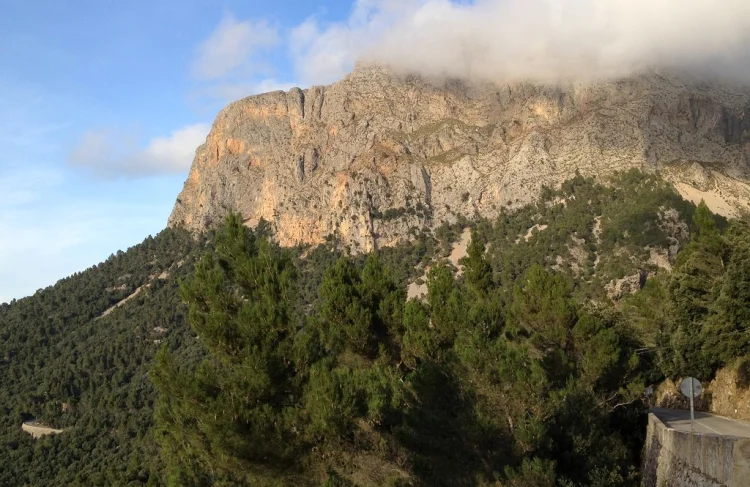
Rising dominantly over the island of Majorca, Puig Major stands as the tallest peak at an impressive elevation of 1,436 meters (4,711 feet), nestled within the majestic Serra de Tramuntana mountain range. Its towering presence has long been a point of interest, but its summit is exclusively within a restricted military zone, making the neighboring Puig de Massanella the highest accessible peak on the island for adventurers. The nearest settlement is the charming town of Sóller, positioned on Majorca’s northwestern coastline, serving as a gateway for those wishing to explore the region’s striking landscapes.
Puig Major’s strategic importance rose during the tense era of the Cold War. In a 1954 agreement with the United States, Spain consented to the establishment of a radar installation aimed at monitoring NATO airspace over the Western Mediterranean. By December 1959, the construction works were finalized, sealing off the mountaintop from ordinary access as military facilities, including barracks, road networks, and a radar station, were developed. These installations fall under the operational purview of the Combat Air Command, specifically the Puig Major Air Barracks/Air Surveillance Station EVA-7. Significant environmental impacts accompanied the construction, including the truncation of the summit and damage to the native plant habitats, triggering debates among conservationists. For half a century, the summit was characterized by two iconic orange protective radar domes, affectionately named "Las Bolas" or "Ses Bolles" by the locals, which in 2005 were replaced by a singular, larger dome due to technological upgrades. Access to this area requires military authorization, reflecting its value as an active defense site critical to regional security operations. Furthermore, the lands surrounding Puig Major are also under the stewardship of the historical Zayas family, adding a layer of private control to any explorative endeavors. While the military presence might deter some, the pull of the Serra de Tramuntana’s natural beauty remains strong, and the legacy of hiking is woven deep into the cultural fabric of Majorca.
Routes such as the Penyal des Migdia and Morro D’en Pelut provide stunning vistas and an adventurous challenge to trekkers, albeit partially encroaching upon the restricted zone, often without official sanction. Despite the barriers, Puig Major continues to be a beacon for those drawn to the intersection of historical intrigue and natural splendor.
Photo: MollySVH
39.80855, 2.79535