Coves d’Artà
Back to all places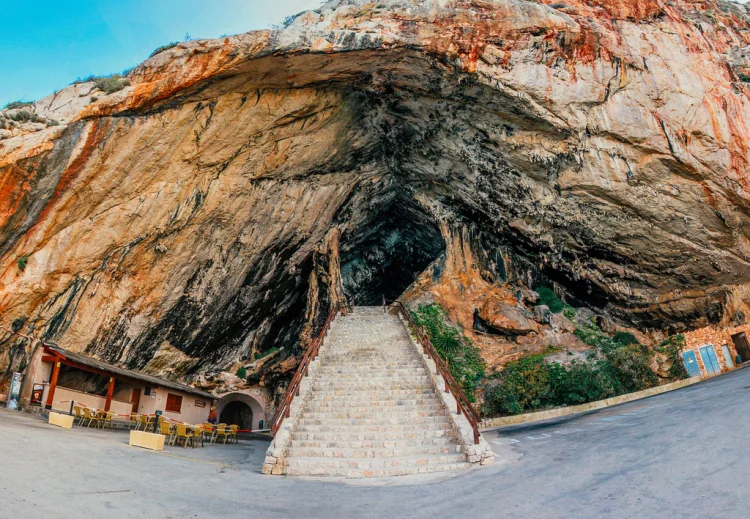
Nestled on the eastern coast of Mallorca, the Coves d’Artà, or Cuevas de Artá, present a spectacular natural wonder of stalactites and stalagmites. These limestone caves, lying within the municipality of Capdepera near Canyamel, were known by their current name even before 1858 when the area was part of Artà.
The historical significance of these caves is profound; they served as a refuge for pirates and, notably in 1229, for the last Moorish soldiers escaping the advancing forces of King Jaume I of Aragon. Stains above the entrance still reveal attempts at fumigation to force occupants out.
Explored for the first time between 1806 and 1808 by cleric Juan Garau y Serra, the caves have been a destination for curious visitors since the 19th century. A guestbook, dating back to 1869, lists figures like Jules Verne, Victor Hugo, and Archduke Leopold Salvator of Austria, affirming its status as a historical curiosity. A map from 1862 and inscriptions from the 16th and 17th centuries add layers to its rich tapestry of stories.
Visitors embark on guided tours through majestic halls and corridors, illuminated to highlight their natural splendor. The entrance lies under a 100-meter-wide rock arch, 25 meters high. Inside, the "Vestibule" invites guests with its massive space, followed by the "Hall of the 1000 Columns," where vertical stalactite and stalagmite formations stand testament to centuries of natural artistry. A renowned 22-meter column dubbed the "Queen of the Pillars" - more slender in form - towers impressively here, nearly sold in 1841 to an English company. Descending further, through the aptly named “Hall of Hell,” visitors encounter thicker pillars and features like "Napoleon’s Sarcophagus."
The journey through the caves culminates in the "Flag Hall," with geological formations resembling folded flags and columns that can emit musical sounds when struck. The experience is accentuated by lighting that changes tonal hues, offering an atmospheric spectacle without the excess of modern show techniques found elsewhere.
The caves’ grandest chamber, “Paradise,” soars 54 meters high, its dimensions comparable to Palma’s cathedral, a profound cavernous silence reverberating within its walls. Quotes from local poet Miquel Costa i Llobera add reflective moments for admirers of literature, solidifying the caves’ cultural relevance. With breathtaking views of the sea at its conclusion, the tour brings to light the serene yet monumental beauty of this geological masterpiece.
39.65611, 3.45110